NGS Analyses.
Accessible. Limitless.
Our Customers

































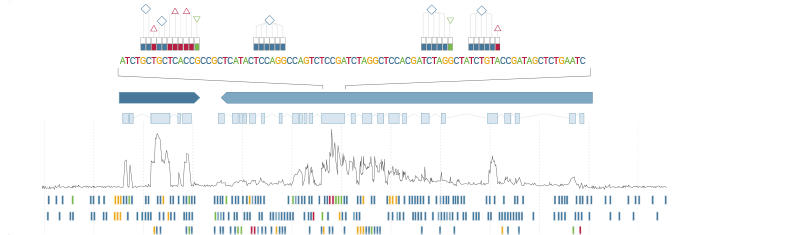
Genedata Selector® is an enterprise software platform that accelerates NGS-based cell line development and biosafety. It provides a single source of truth that empowers scientists to integrate, analyze, and share all project-related data for improved decision-making.
Automate All NGS-Based Workflows
Accelerate your cell line development, bioprocess optimization and biosafety testing with Genedata Selector. The end-to-end solution supports efficient decision-making during vaccine, antibody, cell and gene therapy development, strain optimization, molecular breeding and metagenomics.
Genedata Selector - the only software connecting all the dots from NGS-based R&D to production.
Use Genedata Selector to:
Automate Routine Workflows
The inbuilt user-friendly and easy-to-use Playbooks automate routine workflows increasing standardization, transparency, and throughput from data entry and processing to report generation. This prevents errors due to manual data handling.
Accelerate Decision-Making
Streamline decision-making based on actionable scientific insights. Genedata Selector not only accelerates standardized data processing and analysis with automated workflows but also accelerates results sharing, decisions, and project documentation within the team.
Protect Intellectual Property
With Genedata Selector, there is no need to send out proprietary host cell line sequence information to external partners. All related data can be analyzed by scientists inhouse against the proprietary host cell line genome – reducing the IP risk of sending genome information to service providers or obtaining divergent results by using public domain reference genomes.
Increase Transparency & Simplify Reporting
Access to sample information, linked data, analyses performed, and reports generated is crucial for reporting, and regulatory submissions. Genedata Selector simplifies sample and information management by enabling secure data entry and automated report generation.
As part of our innovation strategy, we have started to implement NGS-based workflows in combination with other state-of-the-art technologies, such as targeted locus amplification (TLA) and gene editing in bioprocess development and production.

The need to streamline and automate these highly complex and data-intensive experimental processes was the main reason behind our selection of Genedata Selector. The platform helps us shorten development cycles and increase efficiency.
Genedata Selector enables us to integrate a wide variety of complex data generated by novel experimental workflows so we can gain a holistic molecular understanding of production cells with the goal of developing high performing bioproduction processes.
... using Genedata Selector we are now able to quickly detect unfavorable properties of a production cell line and engineer preferred properties by editing its genetic background.
Our customers now have available a computational platform that supports our market-leading TLA technology and enables them to significantly increase the number of clones analyzed, thereby increasing the efficiency of their quality control and cell line development workflow.

Cell line development and cell culture optimization face a new era with the introduction of knowledge-driven genomics based on new technologies such as NGS and omics-based approaches.

To optimally handle the complex data, we need a centralized genome knowledge management and analysis solution that addresses the interdisciplinary challenges in the next-generation biotechnology innovations.
Genedata Selector was our obvious choice.
The intelligent organization of large data volume is central to successful research and development of new crop protection products.

I like to compare Genedata's work with the structured organization of a library in which you can easily and quickly find the book you are looking for.
Our many years of experience in working together so far have been very positive.
With Genedata Selector we can integrate a wide range of complex R&D-relevant data and make the data easily accessible within our globally distributed R&D organization.